
How Big Is 7 Inches? A Visual Size Guide With Examples
Seven inches is one of those lengths that’s hard to picture on demand. It’s too long to span with two fingers, too short to reach across a sheet of paper, and it sits in the awkward middle ground where people either guess too small or confuse it with a screen size that isn’t quite what it seems.
This guide clears that up fast. You’ll get the exact conversions — 7 inches in centimeters, millimeters, and feet — plus a handful of everyday objects that land right at 7 inches, including one pairing that hits it to the exact millimeter. There’s a no-ruler trick you can use anywhere and a breakdown of the “7-inch” screen myth that trips up most shoppers. By the end, you’ll spot this length instantly.
Is 7 Inches Big or Small? The Quick Answer
Seven inches equals 17.78 centimeters, 177.8 millimeters, or about 0.58 of a foot. It’s a hand-sized length — roughly a brand-new pencil, or two standard poker playing cards laid end to end, which measure exactly 7 inches together. That makes it a touch longer than even the biggest smartphones and about the width of a dessert plate.
7 Inches in Centimeters, Millimeters, Feet, and Meters
| Unit | 7 inches equals |
| Centimeters (cm) | 17.78 cm |
| Millimeters (mm) | 177.8 mm |
| Feet (ft) | 0.583 ft |
| Meters (m) | 0.178 m |
| Yards (yd) | 0.194 yd |
The imperial-to-metric math is simple: multiply inches by 2.54 to get centimeters. Seven × 2.54 lands you at 17.78 cm — a number worth remembering, because a lot of “7-inch” products are actually spec’d in that metric figure overseas.
[INTERNAL LINK: How Far Is 10 Miles]
What Does 7 Inches Actually Feel Like?
Think palm-plus. If you spread an average adult hand from the wrist crease to the tip of the middle finger, you’re covering roughly 7 to 7.5 inches — so 7 inches is close to your whole hand, minus a sliver.
It’s also the “just under a pencil” zone. A fresh, unsharpened #2 pencil runs about 7.5 inches, so 7 inches is that pencil after a few sharpenings. Not pocket-small, not ruler-long — it sits right in the range where you can still gauge it by eye once you’ve anchored it to one object.
What Everyday Object Is About 7 Inches?
Here are the references I keep coming back to because they hold up when you actually put a tape measure on them.
A Standard Pencil (Just Barely)
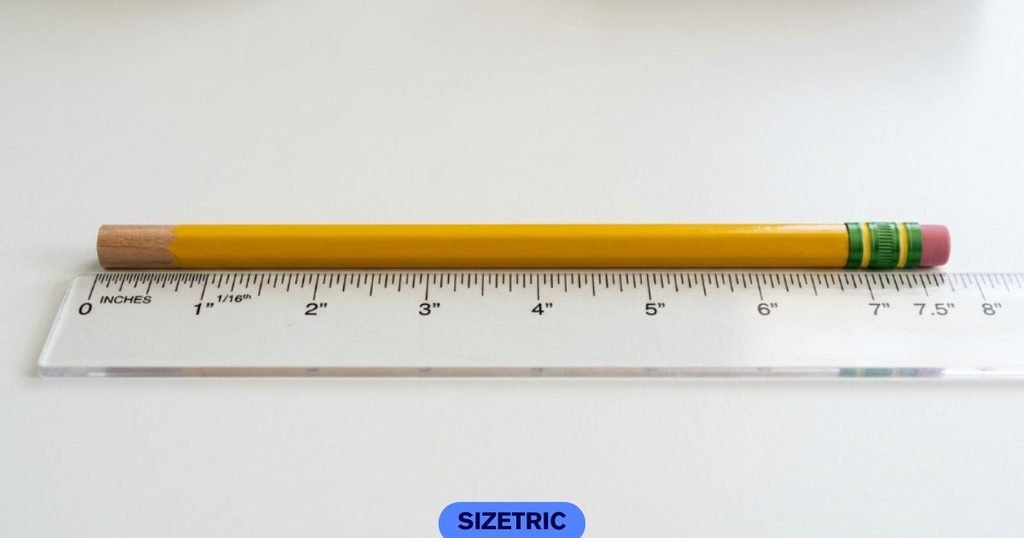
A new wooden pencil is about 7.5 inches unsharpened. Snap the point off a used one and you’re sitting almost exactly at 7. It’s the fastest mental yardstick most people already own.
Two Playing Cards End to End
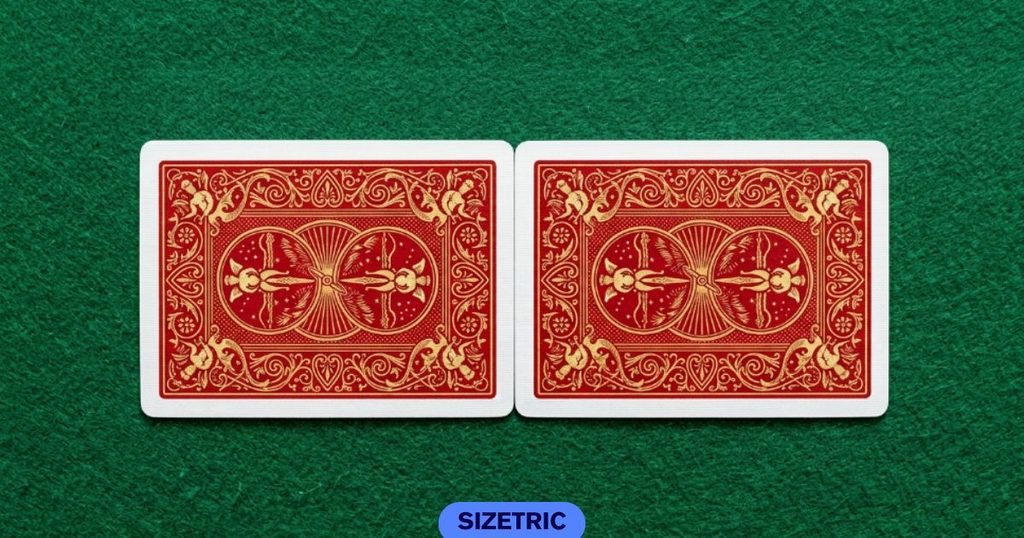
A poker-size playing card is 2.5 × 3.5 inches. Lay two of them long-edge to long-edge and they total exactly 7 inches — no rounding, no “about.” This is the single most precise everyday reference on the list.
A US Dollar Bill Plus a Thumb
A dollar bill is 6.14 inches long. Add roughly a thumb’s width (about 0.9 inch) past the end and you’ve hit 7. Handy because nearly everyone has a bill within reach.
The Diagonal of a Small Tablet
A “7-inch tablet” is named for its screen measured corner to corner — that diagonal is 7 inches. (The device itself is a bit taller and much narrower, which is exactly the mix-up covered further down.)
A Dessert or Salad Plate
Small plates typically span 6.5 to 8 inches across, with dessert plates most commonly around 7 inches in diameter. It’s a rare round reference for a length people usually only picture as a straight line.
Two Credit Cards, Almost
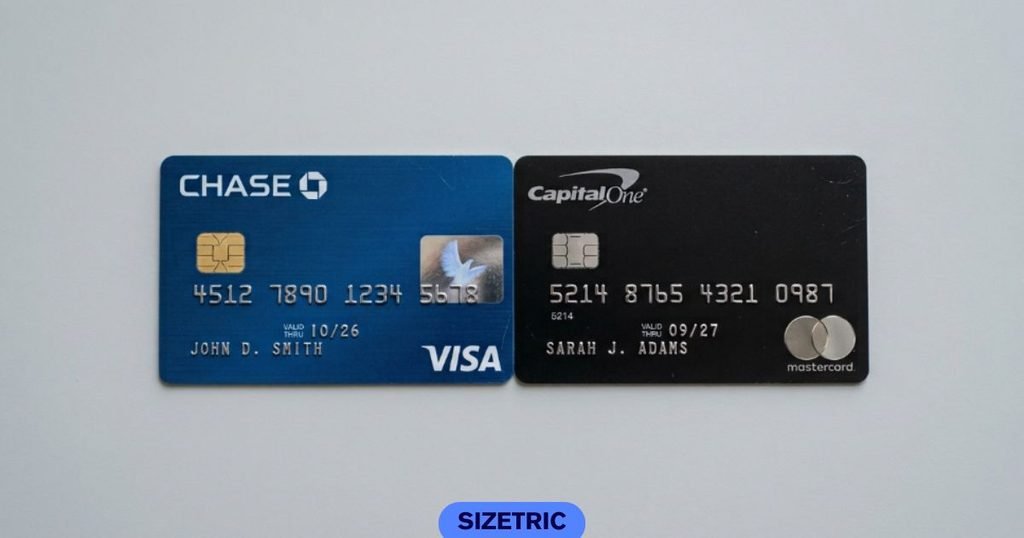
A credit card is 3.37 inches long. Two end to end give you 6.74 inches — just shy of 7. Useful as a “you’re nearly there” check when a pencil isn’t handy.
Size Comparison Table
| Object | Real length | How it compares to 7 in |
| Two playing cards (end to end) | 7.0 in | Exact match |
| Dessert plate (diameter) | ~7 in | About the same |
| New pencil (unsharpened) | 7.5 in | Slightly longer |
| Adult hand (wrist to fingertip) | 7–7.5 in | About the same |
| US dollar bill | 6.14 in | Shorter by ~0.9 in |
| Two credit cards (end to end) | 6.74 in | Shorter by ~0.25 in |
| Largest smartphones (height) | ~6.4 in | Shorter by ~0.6 in |
How Do You Judge 7 Inches Without a Ruler?
No tape measure? These body-and-object tricks get you close, and the first one is dead-on accurate.
- Line up two playing cards. Long edge to long edge, they equal exactly 7 inches. If you have a deck nearby, this beats guessing every time.
- Use your hand. Splay your fingers and measure wrist crease to middle fingertip — an average adult hand is about 7 to 7.5 inches, so treat your full hand as “roughly 7, maybe a hair more.”
- Grab a dollar bill. It’s 6.14 inches long; add a thumb-width past the end to reach 7.
- Fall back on a pencil. A standard pencil is 7.5 inches new, so hold your target against a pencil and shave off about a half inch mentally.
Anchor to one of these and you’ll estimate 7 inches within a quarter inch or so — plenty accurate for packing, framing, or checking whether something fits a shelf.
What’s Just Below and Just Above 7 Inches?
Sizes on either side are easy to confuse, so here’s how to separate them.
6 inches (15.24 cm) is the length of a short school ruler and almost exactly a dollar bill. If your object matches a bill with no overhang, you’re at 6, not 7.
8 inches (20.32 cm) is roughly the long side of a small tablet or the reach across two dollar bills minus a bit. The jump from 7 to 8 is about the width of a finger — small, but enough that an 8-inch object noticeably overhangs a lined-up pair of playing cards.
Worth noting for the metric crowd: 20 cm is bigger than 7 inches, since 20 cm equals 7.87 inches. People assume the two are interchangeable and they’re nearly an inch apart.
[INTERNAL LINK: 8 Inches Long] · [INTERNAL LINK: How Far Is 50 Miles]
Where 7 Inches Shows Up Most
This length matters more in real life than its plain number suggests. Compact tablets and e-readers cluster around a 7-inch screen because it’s the sweet spot between phone and full-size tablet — big enough to read comfortably, small enough for one hand. Trade paperbacks and many hardcover pages run close to 7 inches wide. In the kitchen, a utility or santoku knife blade often lands near 7 inches, and dessert plates hover right there too. If you’re shopping online for any of these, the 17.78 cm figure is the one to sanity-check against the listed dimensions.
Read Also: How Far Is 500 Feet? Clear Comparisons You Can Picture
The 7-Inch Myth Worth Knowing
The biggest misconception: that a “7-inch” screen device is 7 inches long. It isn’t. Screen size is always the diagonal — corner to corner — so a 7-inch tablet’s height and width are each less than 7 inches, while the whole device (with its bezel) can actually be a bit taller. If you measure the front edge of a 7-inch tablet expecting 7 inches, you’ll come up short on width and possibly long on height. Always separate “screen diagonal” from “device length” before you assume something fits.
The second trap is thinking 7 inches is tiny. Set against your hand or a pencil, it’s a solidly mid-sized length — longer than any phone on the market, not a pocket trinket.
Fast Answers: 7-Inch Questions People Actually Ask
How big is 7 inches visually?
Seven inches looks like two playing cards laid end to end or a barely-used pencil. It’s about the length of your whole splayed hand, wrist to fingertip.
Is 7 inches big or small?
It’s mid-sized — longer than the biggest smartphone (~6.4 in) but shorter than a sheet of paper is wide (8.5 in). Not pocket-small, not ruler-long.
How to measure 7 inches without a ruler?
Lay two standard playing cards end to end for an exact 7 inches. Or use an adult hand spread from wrist to fingertip, which spans about 7–7.5 inches.
How big is 7 inches compared to a hand?
It’s close to a full adult hand. An average spread hand (wrist crease to middle fingertip) runs 7–7.5 inches, so 7 inches is your hand minus a sliver.
Is a 7 inch hand big for a woman?
Slightly above average. Most adult women’s hands measure about 6.5–7 inches from wrist to fingertip, so a 7-inch hand sits at the larger end of typical.
What household object is 7 inches?
A dessert plate’s diameter, a used pencil, or a utility knife blade all sit near 7 inches. Two credit cards end to end come close at 6.74 inches.
Locking 7 Inches Into Memory
Seven inches turns out to be friendlier than its bare number suggests. It’s 17.78 cm on paper, and in the real world it’s two playing cards laid end to end, a barely-used pencil, or just about your whole splayed hand. Anchor it to any one of those and you’ve got a reference you can carry anywhere — no tape measure required.
The one thing worth holding onto is the screen distinction: a “7-inch” device is measured corner to corner, not edge to edge, so the object itself is never quite 7 inches long. Keep the two-card picture in mind and the next time a product listing or a shelf gap makes you reach for a ruler you don’t have, you won’t need one.
Related Guides:
1: How Much Is 10 oz? Weight, Grams, Cups & Examples
2: What Is 20 kg? Weight, Conversions & 6 Real Examples
3: How Long Is 25 Feet Visually? 6 Ways to Picture It

2 Comments