
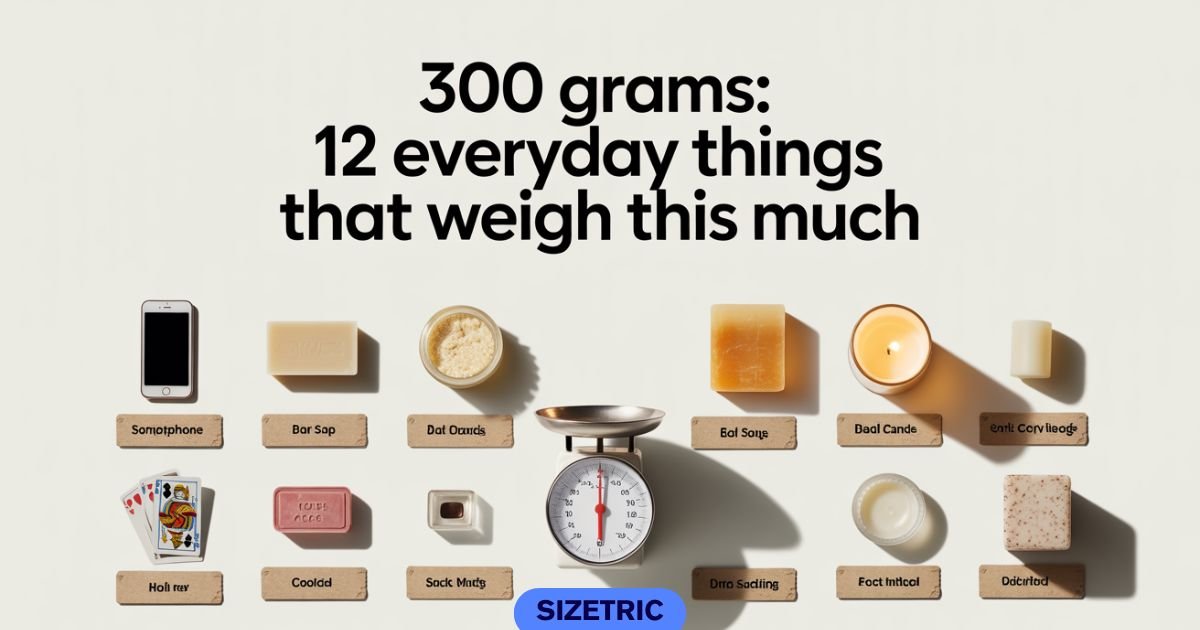
300 Grams: 12 Everyday Things That Weigh This Much
Three hundred grams is a small unit of weight. It equals 0.3 kilograms or about 0.66 pounds. In simple terms, it’s a little under two-thirds of a pound.
You’ve seen it on recipes, labels, and postage forms. But what does it really feel like? Most people can’t picture 300 grams without holding something first.
A full can of soup weighs close to 300 grams. So does a big orange or a thick paperback book. Once you feel one, you can guess this weight anytime.
The Short Answer: How Heavy 300 Grams Really Is
300 grams is a little under two-thirds of a pound — roughly the weight of a full can of soup or a large orange resting in your palm. In everyday terms: 0.3 kg, about 10.6 ounces, or 0.66 pounds. It’s noticeable when you pick it up, but no one would call it heavy.
300 Grams in Every Unit You’ll Need
| Unit | 300 grams equals |
| Grams (g) | 300 g |
| Kilograms (kg) | 0.3 kg |
| Milligrams (mg) | 300,000 mg |
| Ounces (oz) | ≈ 10.58 oz |
| Pounds (lb) | ≈ 0.66 lb |
| Pounds & ounces | 0 lb, ≈ 10.6 oz |
Those figures stay fixed throughout this article — every comparison below is measured against the same 300 g / 10.58 oz / 0.66 lb.
What 300 Grams Feels Like in Your Hand
Think of a weight that’s clearly there but easy to hold with two fingers and a thumb. It’s heavier than a modern smartphone (most sit near 200 g) yet lighter than a full 500 ml water bottle (about 520 g). Dense, palm-sized objects hit this range: fruit, a mug, a couple of balls. That’s the mental anchor to keep as you read.
12 Everyday Things That Weigh About 300 Grams
The Average Adult Human Heart
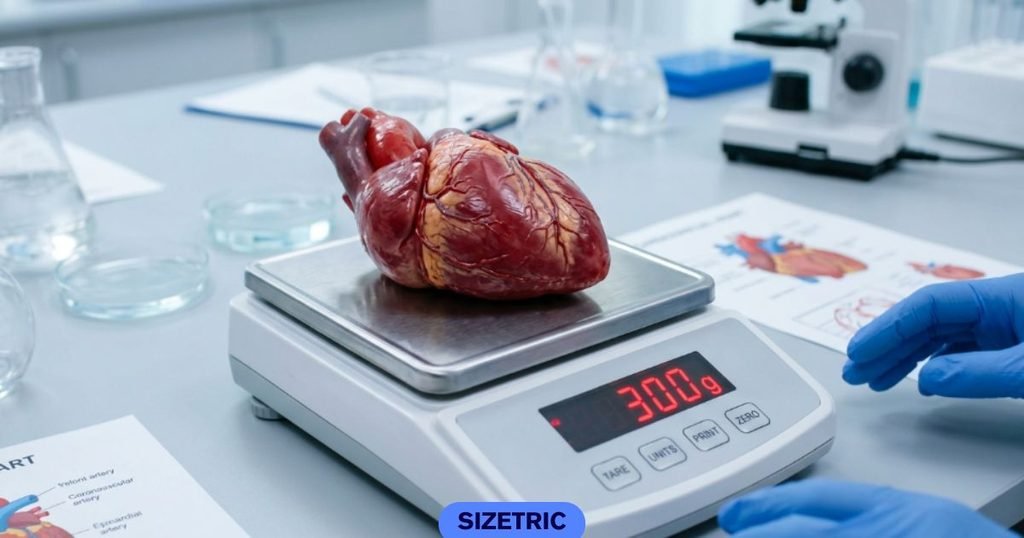
An adult human heart typically weighs between 250 and 350 grams, with a healthy average sitting right around 300 grams. Men’s hearts tend toward the top of that band and women’s toward the bottom, but the textbook figure lands almost exactly on our target.
You’ll never heft your own, of course, but it’s the reference people remember. Picture a clenched adult fist — that’s roughly the heart’s size, and 300 grams is roughly its mass. It’s the kind of fact a biology teacher can hang a whole lesson on.
Sixty U.S. Nickels
A U.S. nickel is minted to weigh exactly 5.00 grams. Stack sixty of them and you land on 300 grams precisely — no rounding, no “about.” It’s the one comparison here that’s exact rather than approximate.
That precision is why nickels are the home go-to for checking a kitchen or jewelry scale. Ten give you 50 g, forty give you 200 g, and sixty give you a clean 300 g test weight. Keep a roll in a drawer and you can catch a drifting scale in seconds.
Read Also: How Much Is 20 Grams? Weight, Conversions & Examples
Two Baseballs
A regulation baseball weighs 142 to 149 grams, averaging about 145 grams. Set two side by side and you’re at roughly 290 grams — a whisker under 300, close enough that your hand can’t tell the difference.
Baseballs work well because their weight is standardized worldwide. Cup one in each palm and you’re holding almost exactly 300 grams. It’s a useful gut-check at a sporting-goods store when you want to feel how heavy a small parcel will land.
A Large Baking Potato
A large russet or baking potato usually runs 250 to 350 grams, and a good-sized one sits near 300 grams. Small salad potatoes are far lighter, so reach for the big oval bakers.
Most kitchens have one on hand, which makes it an easy sanity check. Feel its weight, then transfer that sense to a bag of nuts or a pasta portion you’re trying to eyeball. [IMAGE: large russet potato on a kitchen scale reading 300 g]
A Full Can of Condensed Soup
The contents of a standard condensed-soup can weigh about 298 grams — a 10.5-ounce net fill that rounds to a clean 300 grams. The steel can itself adds a bit more, so the whole thing tips a touch heavier on the scale.
Nearly everyone has one in the pantry, so it’s a reference you can grab instantly. Hold a full can and that’s your 300-gram benchmark — handy when you’re mailing a small package and guessing whether it’ll clear a postage tier.
Two D-Cell Batteries
A single alkaline D battery weighs around 135 to 150 grams. Two of them come to roughly 280 grams — just shy of 300, but close enough for a quick feel.
If you keep spares in a junk drawer, they double as an impromptu weight. Drop two into your palm to lock in what “a bit under 300 grams” feels like before you weigh something delicate.
A Thick Paperback Novel
A chunky trade paperback — think a 400-page novel — typically weighs 300 to 350 grams, depending on the paper stock. A slim paperback is lighter, so picture a proper doorstop of a read.
Books are everywhere, which makes them a convenient yardstick. Lift one and you’ve got a rough 300-gram feel in a flat, easy-to-hold shape — much like a tablet or small laptop you might be comparing.
A Big Navel Orange
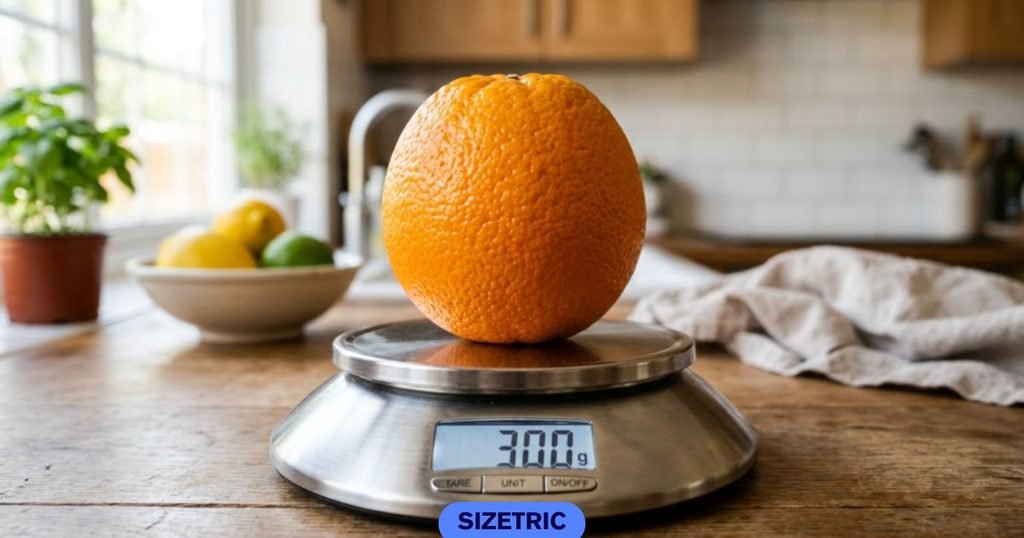
A large navel orange weighs roughly 250 to 300 grams, with the biggest specimens reaching that top mark. Small mandarins are far lighter, so choose the fist-plus-sized fruit.
Produce is intuitive because you’re already picking it up at the market. Cup a big orange and you’re holding close to 300 grams of round, dense weight — no scale required.
An Empty Ceramic Coffee Mug
A standard ceramic or stoneware coffee mug, empty, weighs about 300 to 350 grams. Thin porcelain cups run lighter; the chunky diner-style mug sits right in range.
It’s very likely the object on your desk right now. Heft it empty and you’ve got a live 300-gram gauge — then imagine that same weight as a handful of coins or a small food portion.
A Medium Grapefruit
A medium grapefruit weighs around 300 to 350 grams, landing near the heavy end of the fruit references here. Ruby and pink varieties fall in the same band.
Bigger and denser than an orange, it fills the hand and reads clearly as “heavier than a phone.” One pick-up at the produce aisle tells you exactly what a 300-gram-plus item feels like.
Two Large Bananas
A large banana with its peel weighs about 150 to 180 grams, so two together come to roughly 300 to 360 grams. Peeled, they’d be lighter, so keep the skins on for this comparison.
Grab a small pair and you’ve got a soft, familiar 300-gram reference. It’s handy when portioning fruit for a lunchbox or matching a recipe that lists ingredients in grams.
A Compact Mirrorless Camera Body
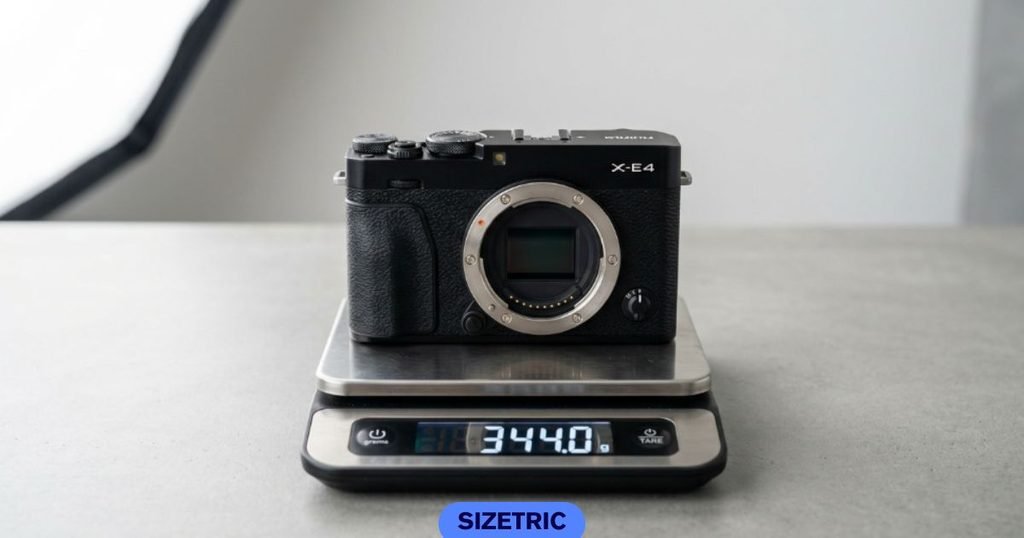
A small mirrorless camera body with its battery weighs roughly 300 to 350 grams — a popular entry-level model sits near 344 grams. That’s the bare body, no lens attached.
For anyone who shoots, it’s a weight they already know by feel. Lift the naked body and you’re holding about 300 grams of compact, dense gear — a great reference if photography is your world.
Every 300-Gram Reference at a Glance
| Object | Typical weight | Match to 300 g |
| Adult human heart | ~250–350 g | Average ≈ 300 g |
| 60 U.S. nickels | 300 g | Exact |
| Two baseballs | ~290 g | Just under |
| Large baking potato | ~250–350 g | ≈ 300 g |
| Full condensed-soup can (contents) | ~298 g | ≈ 300 g |
| Two D-cell batteries | ~280 g | Just under |
| Thick paperback novel | ~300–350 g | ≈ 300 g |
| Big navel orange | ~250–300 g | Near the top |
| Empty ceramic mug | ~300–350 g | ≈ 300 g |
| Medium grapefruit | ~300–350 g | ≈ 300 g |
| Two large bananas (with peel) | ~300–360 g | ≈ 300 g |
| Compact mirrorless body | ~300–350 g | ≈ 300 g |
No Scale? Judge 300 Grams by Feel
Here’s the honest truth about eyeballing weight: your hand is a decent scale once it has a reference. Pick up a full soup can or a big orange, pay attention, and that sensation is 300 grams. Do it twice and your muscle memory keeps it.
For a two-handed check, put a known 300-gram item in one palm and the mystery object in the other, then bounce them gently. Your arms are surprisingly good at spotting a match. And if you want an exact anchor rather than a rough one, count out 60 nickels — that’s the only reference on this page you can trust to the gram.
Where Knowing 300 Grams Actually Comes in Handy
Calibrating a scale. Cheap kitchen and pocket scales drift over time. Sixty nickels give you a free, exact 300 g check weight — no need to buy calibration weights.
Cooking without a scale. Recipes love grams. When yours calls for 300 g of an ingredient and the scale’s dead, a full soup can or two large bananas gets you honestly close.
Postage and shipping. Mailing tiers jump at specific weights. Holding a 300-gram benchmark first tells you whether a padded envelope will sneak under the next price bracket.
Portioning and teaching. Whether you’re plating a portion or showing a kid what 300 grams looks like, a familiar object beats an abstract number every time.
Read Also: How Much Is 1 Gram? Weight, Examples & Conversions
Where People Go Wrong Guessing 300 Grams
Confusing net weight with total weight. A soup can’s contents are ~300 g, but the whole can weighs more once you add the steel. Same trap with any packaged food.
Assuming size equals weight. A big, fluffy object can weigh far less than a small dense one. A pillow dwarfs an orange yet weighs a fraction as much — density is what your hand is really reading.
Forgetting the container or peel. Two bananas hit 300 g with their skins; peeled, you’d fall short. Always compare like for like.
Letting your phone anchor you low. Most phones sit near 200 g, so if a phone is your only mental reference, you’ll consistently underguess. Nudge your estimate up.
Quick-Fire Answers
What is 300 grams in cups?
It depends on the ingredient. For water, 300 grams is about 1.27 cups; for flour, it’s roughly 2.4 cups.
How many 300g are in 1 kg?
There are about 3.33 portions of 300 grams in 1 kilogram, since 1 kg equals 1,000 grams.
Is 300 grams half a pound?
No. Half a pound is about 227 grams, while 300 grams equals roughly 0.66 pounds (about two-thirds of a pound).
How does 300 grams look like?
It looks like a full can of soup, a big orange, or a thick paperback book resting in your palm.
How heavy is 300g?
It’s fairly light — about 0.66 pounds or 10.6 ounces, heavier than most phones but lighter than a full water bottle.
Locking 300 Grams Into Memory
By now, you know that 300 grams is a light weight. It is about two-thirds of a pound, or 0.3 kilograms. You can find this weight all around your home. A full can of soup, a big orange, or a thick book all weigh close to 300 grams. Sixty nickels give you exactly 300 grams every time. These everyday objects turn a plain number into something you can hold and feel.
Now you can guess 300 grams without a scale. Just pick up a soup can and remember how heavy it feels. Your hand becomes a simple tool for this weight. This skill helps you in the kitchen, at the post office, and in class. Practice with a few objects, and you will master 300 grams for good.
Related Guides:
1: 100 Grams: How Heavy It Is + What Weighs That Much
2: How Much Is 10 Grams? A Weight You Can Hold in Two Coins
3: 500 Grams: How Heavy It Is & What Weighs That Much
4: Coke Can Dimensions: Height, Diameter & Every Size
5: Pokémon Card Dimensions: Exact Size in Inches, mm & cm



2 Comments