How Long Is 2 Inches? Real Size, Examples & Conversions
Two inches is one of those measurements you bump into constantly — on a shipping label, a craft template, a screw packet, a phone-case listing — yet it’s oddly hard to picture the moment you need it. It’s small enough to feel familiar and just big enough that guessing wrong actually matters when you’re ordering online or cutting to size.
This page settles it fast. You’ll get the exact conversions in every unit, a short set of everyday objects that land right at 2 inches (some dead-on, some honestly a hair off, and I’ll tell you which is which), and three ways to gauge the length using things already in your pocket — no ruler required.
The Quick Answer
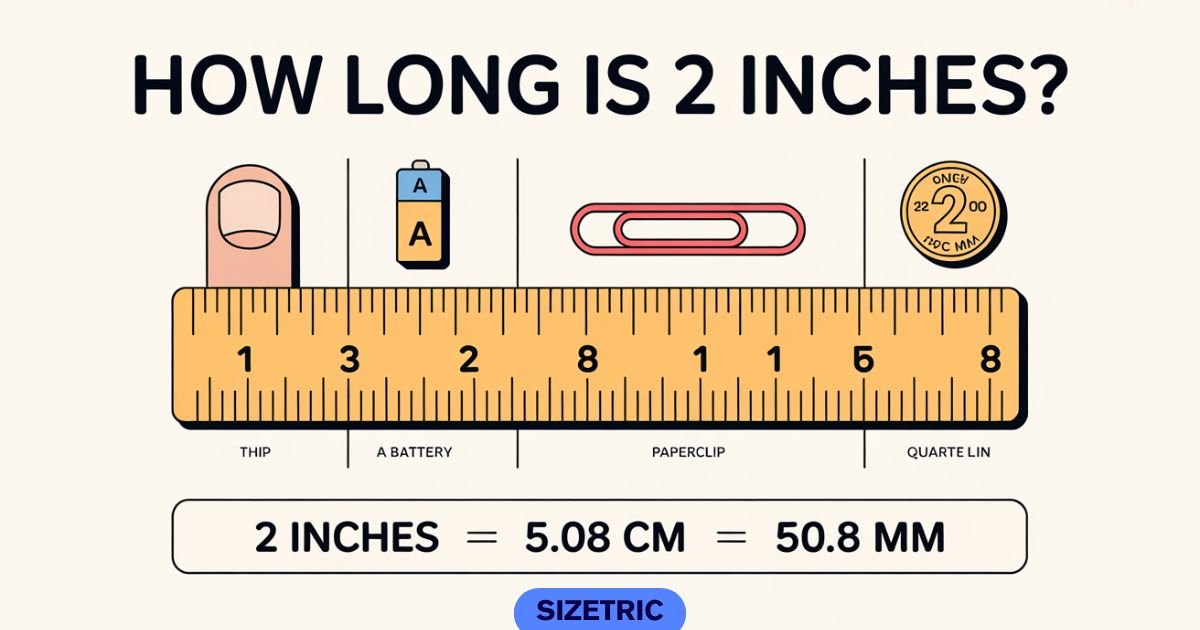
Two inches equals 5.08 centimeters, or 50.8 millimeters — about the short edge of a business card, or two thumb-knuckle segments end to end. It’s a small, palm-friendly length: bigger than a single inch, well under the width of your hand. In feet that’s 0.167 ft; in meters, 0.0508 m.
2 Inches in Every Unit
Because 1 inch is defined as exactly 2.54 cm, every conversion below is precise, not rounded guesswork.
| Unit | 2 inches equals |
| Centimeters | 5.08 cm |
| Millimeters | 50.8 mm |
| Feet | 0.1667 ft (1/6 ft) |
| Meters | 0.0508 m |
| Inches | 2 in |
[INTERNAL LINK: How Long Is 6 Inches?]
Is 2 Inches Big or Small?
Small — firmly in “palm territory.” At 2 inches you’re looking at something that sits comfortably across two or three fingers, disappears inside a closed fist, and reads as short rather than long. It’s the scale of bottle caps, key blades, and shipping-box clearances, not furniture or doorways. If you can pinch it between thumb and forefinger with room to spare, you’re in the right neighborhood.
Six Everyday Things That Land at About 2 Inches
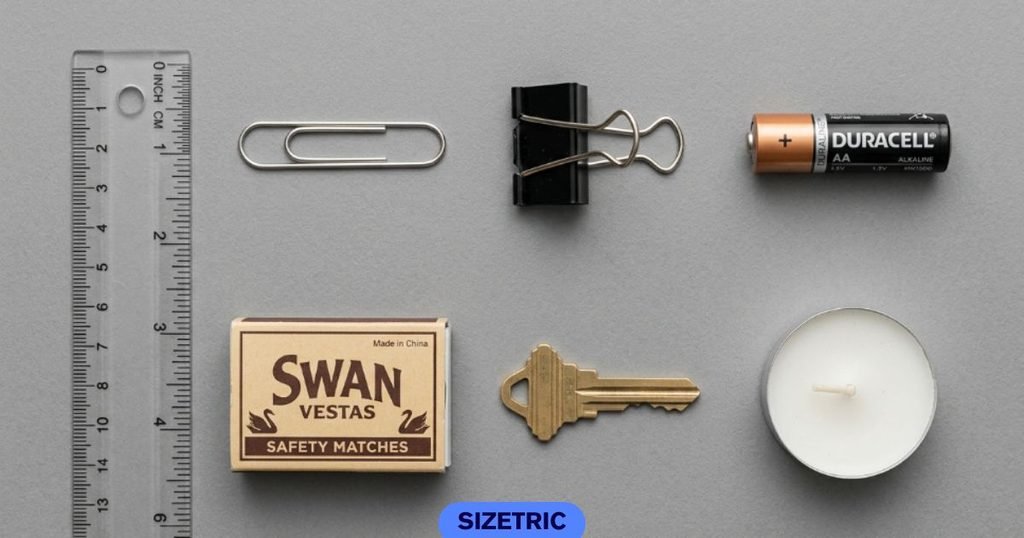
These are the references I keep coming back to, because they’re consistent and usually within arm’s reach. A business card or a coin doesn’t change size between one house and the next, which is exactly what makes a good mental ruler.
I’ve flagged each object as exact, just over, or just under — because “close enough to eyeball” and “exactly 2 inches” are not the same thing, and a lot of size lists blur that line.
Read Alos: How Big Is 4 Inches? Real-World Size Examples & Chart
Short edge of a business card
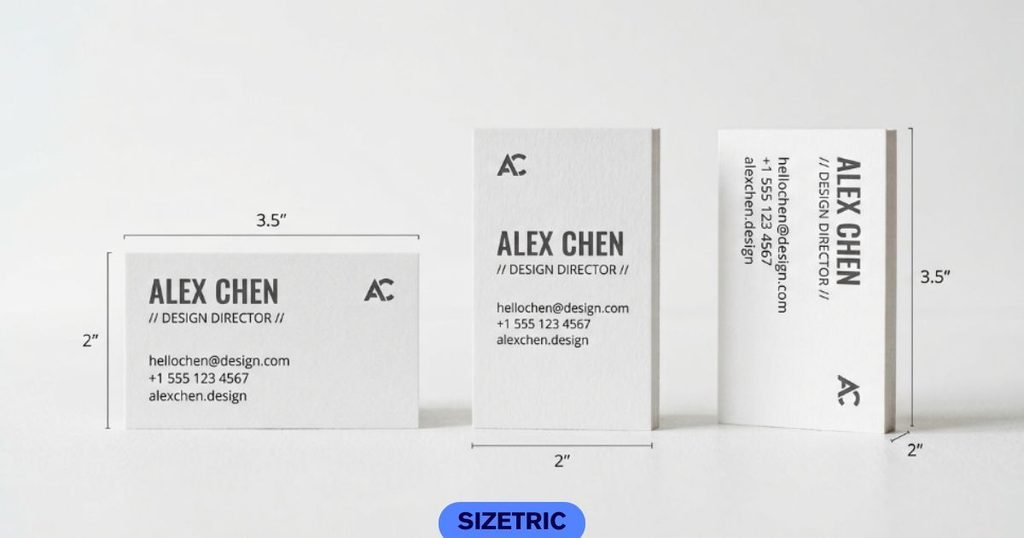
A standard US business card measures 3.5 × 2 inches, so its short side is exactly 2 inches — 5.08 cm on the nose. There’s no rounding or “about” involved; it’s a genuine 2-inch edge sitting in most wallets and desk drawers.
That precision is what makes it the best reference here. When you’re checking whether a pin, a sticker, or a phone cutout is really 2 inches, lay it against the short edge of a card and you’ve got an instant, exact ruler with zero guesswork.
Short edge of a credit or debit card
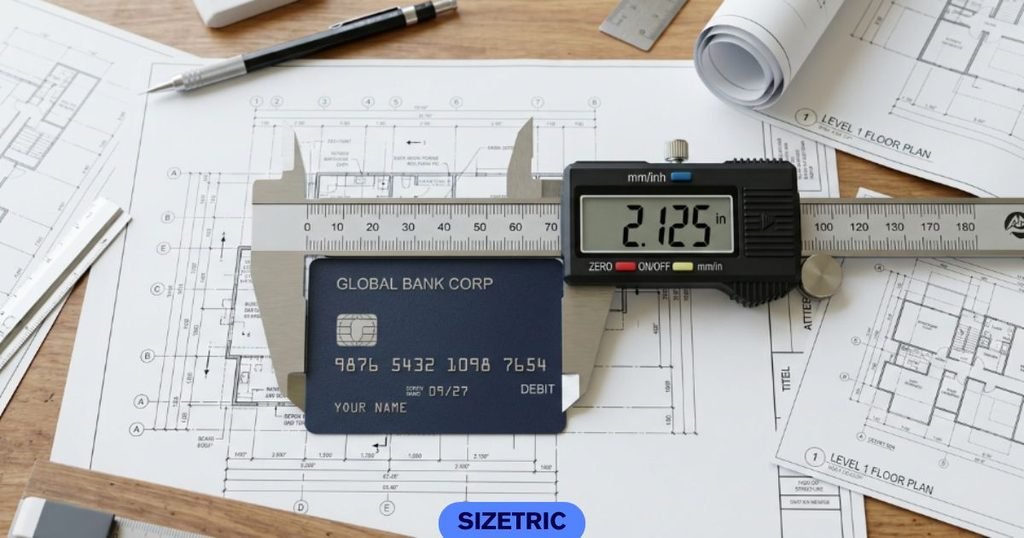
Any bank card follows the ISO ID-1 standard, which puts its short edge at 2.125 inches — just over 2 inches by about 3 mm. Every Visa, Mastercard, and debit card on earth is this same size, so it’s completely predictable.
Because it’s slightly long, treat it as “2 inches plus a sliver” rather than dead-on. Still, for a fast field check — measuring a drawer gap or a package clearance away from any ruler — the card in your wallet is the most portable 2-inch gauge you own.
AA battery
An AA battery runs about 1.99 inches (50.5 mm) from tip to tip — a genuine hair under 2 inches, not exactly on it, despite what plenty of size lists claim. The difference is under half a millimeter, so for eyeballing it’s effectively spot-on.
It earns a place because AAs are everywhere: remotes, clocks, game controllers, toys. Pull one out and stand it next to whatever you’re sizing up, and you’ve got a near-2-inch stick that’s far more reliable than trying to picture the length in your head.
Two hockey pucks stacked
A regulation hockey puck is exactly 1 inch thick, so two stacked come to a clean 2 inches — 5.08 cm — with no rounding needed. It’s an oddly precise trick once you’ve seen it in person.
Obviously you won’t always have pucks handy, but the reason it’s worth knowing is the exactness: it’s one of the few “stack two of the same thing” tricks that lands perfectly. If you play or coach, it’s a quick way to check strapping, spacing, or gear right at the rink.
Jumbo paper clip
A jumbo (No. 1) paper clip stretches to roughly 2 inches long, against about 1.3 inches for the standard size — so the size gap between the two is easy to feel. Call it “about right” rather than exact, since brands vary by a millimeter or two.
Its value is availability: paper clips live in every office drawer and pencil case. When you need a rough 2-inch check while sorting mail or packing a parcel, an unbent jumbo clip is usually within reach and close enough for the job.
Two US quarters side by side
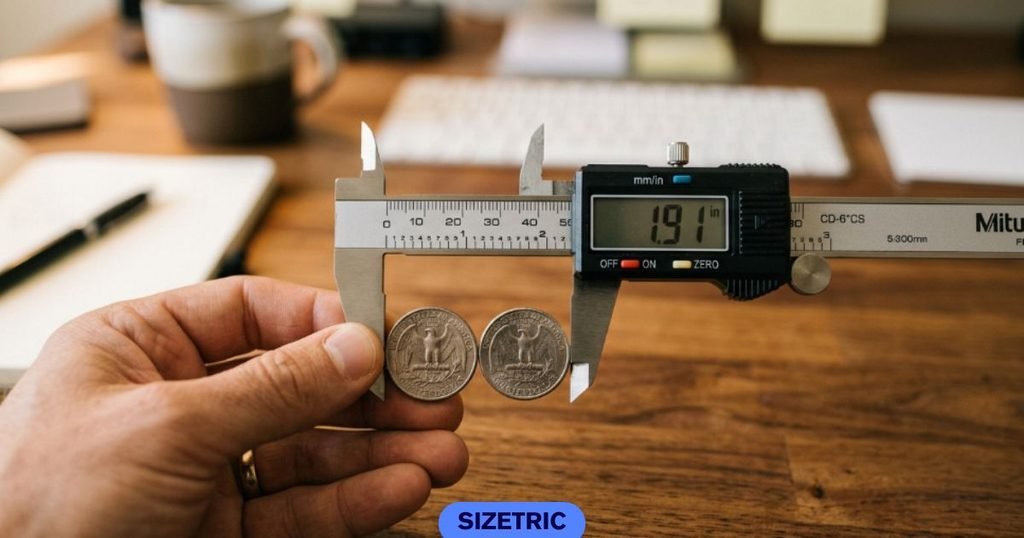
A US quarter is 0.955 inches across, so set two edge to edge and you span about 1.91 inches — just under 2 inches by roughly 2 mm. It’s the closest everyday coin trick going.
Coins make good references because their diameters are fixed by law and never wear down enough to matter. When you’re away from any ruler but have change in your pocket, two quarters give you a quick “just shy of 2 inches” read — nudge a couple of millimeters past them and you’re there.
The Same References at a Glance
| Object | Real measurement | Versus 2 inches |
| Business card (short edge) | 2.00 in / 5.08 cm | Exact |
| Bank card (short edge) | 2.125 in / 5.40 cm | Just over |
| AA battery (length) | 1.99 in / 5.05 cm | A hair under |
| Two hockey pucks stacked | 2.00 in / 5.08 cm | Exact |
| Jumbo paper clip (length) | ~2.0 in / ~5.0 cm | About right |
| Two quarters side by side | 1.91 in / 4.85 cm | Just under |
No Ruler? Three Ways to Nail 2 Inches
When there’s no tape measure around, these get you within a few millimeters using your body or your wallet.
- Two thumb-knuckle segments. The tip of an adult thumb to its first knuckle is roughly 1 inch. Picture that length doubled — two segments end to end — and you have 2 inches.
- The card in your wallet. A bank card’s short edge is 2.125 inches. Line up whatever you’re checking against it; if it matches the short side, it’s basically 2 inches.
- Two coins. Slide two US quarters together edge to edge. That span is about 1.9 inches — a touch shy of 2, so nudge a couple of millimeters past it.
Read Also: How Big Is 7 Inches? A Visual Size Guide With Examples
1 Inch, 2 Inches, 3 Inches: Telling Them Apart
The neighbors matter, because 2 inches is easy to confuse with sizes on either side.
| Length | Centimeters | Quick mental image |
| 1 in | 2.54 cm | One thumb-knuckle; a US quarter’s width plus a sliver |
| 1.5 in | 3.81 cm | A little longer than a quarter’s diameter × 1.5 |
| 2 in | 5.08 cm | Business-card short edge |
| 2.5 in | 6.35 cm | A golf ball plus a bit |
| 3 in | 7.62 cm | A standard hockey puck’s diameter |
One conversion trap worth flagging: 2 inches is not 5 cm — it’s 5.08 cm. So if a metric spec says 5 cm and you’re working in inches, 2 inches is about 0.8 mm longer. Tiny, but it’s the reason “2 inches” and “5 cm” aren’t interchangeable in precise work.
Where a 2-Inch Measurement Actually Comes Up
This size shows up more than you’d expect. Screw and bolt lengths, drawer-pull spacing, and phone-lens cutouts all live around 2 inches. Online, it’s a common product dimension for luggage tags, enamel pins, patches, and cosmetic tubes — so knowing it by sight helps you judge whether that “2-inch” item is pocket-sized (it is) before it arrives.
[INTERNAL LINK: How Far Is 10 Miles?]
Fast Answers to Common 2-Inch Questions
How long is 2 inches in cm?
Exactly 5.08 cm. It’s also 50.8 mm, 0.167 feet, or 0.0508 meters — all fixed values, since 1 inch is defined as 2.54 cm.
What household item is 2 inches long?
The short edge of a business card is exactly 2 inches, and two stacked hockey pucks match it too. A jumbo paper clip, an AA battery, and a bank card’s short side all sit within a whisker of 2 inches.
Is 2 inches or 5 cm bigger?
2 inches is slightly bigger. Two inches is 5.08 cm, so it beats a flat 5 cm by about 0.8 mm — negligible for everyday use, but not identical.
How can I measure 2 inches without a ruler?
Use a bank card’s short edge (2.125 in) or two thumb-knuckle lengths (about 1 inch each). Two quarters side by side also gets you close, at roughly 1.9 inches.
Is 2 inches considered big?
No — it’s a small, palm-scale length. It fits inside a closed fist and spans just two or three adult fingers, which is why it’s used for compact objects like caps, keys, and pins.
One Reference to Remember It By
If you keep just one anchor, make it the business card: its short edge is exactly 2 inches (5.08 cm), and it’s flat, everywhere, and never changes size. Match anything to that edge and you’ll read 2 inches at a glance.
For the times a card isn’t handy, fall back on your thumb — two knuckle-to-tip lengths land you right around the mark. Between the card in your wallet and the hand on your arm, you’re never without a way to spot 2 inches again.
[INTERNAL LINK: 8 Inches Long?] · [INTERNAL LINK: How Far Is 50 Miles?] · [INTERNAL LINK: How Far Is 500 Feet?]